
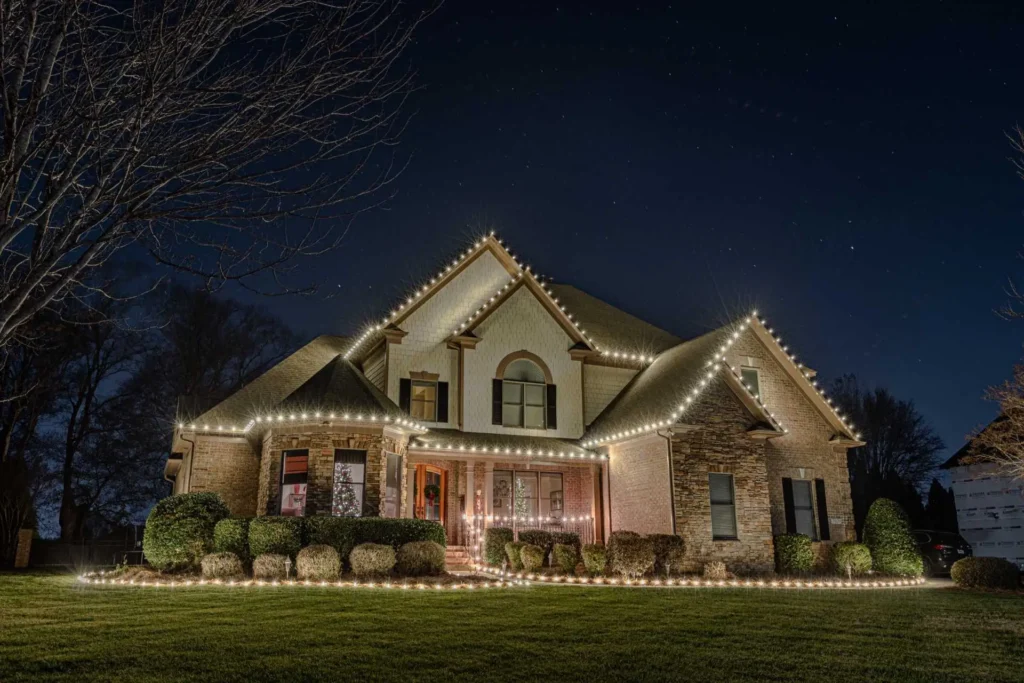
Holiday Lighting Insights & Resources Atlanta organizes practical information about design, cost factors, property preparation, commercial coordination, maintenance, removal, storage, local coverage, and estimate requests. Articles should answer real customer questions and connect readers to the correct service page.
Planning and Design Topics
Planning guides can explain roofline choices, tree and landscape lighting, entry décor, color temperature, display density, focal points, property measurements, power considerations, and ways to communicate a preferred style with photos.
Commercial articles can address stakeholder approvals, brand alignment, work-hour restrictions, tenant and customer flow, access, lift requirements, event deadlines, and maintenance communication.
Pricing, Maintenance, and Post-Season Topics
Pricing content should explain factors instead of publishing unsupported universal prices. Useful factors include property size, roof complexity, trees, access, design density, materials, timing, controls, support, removal, and storage.
Maintenance and removal guides can help customers understand issue reporting, weather limitations, customer responsibilities, takedown windows, labeling, inspection, storage, and next-season renewal.
Editorial Quality and Internal Linking
Every article should have one clear topic, an accurate title and description, useful subheadings, original or properly licensed images, descriptive alt text, a named author, an update date, and links to relevant service and estimate pages.
Avoid publishing several articles that answer the same query with only minor wording changes. Consolidate overlapping content and maintain one strongest resource for each intent.
How to Prepare for a Useful Project Review
A useful review starts with accurate property information. Share the address, property type, daytime photos, preferred display areas, design direction, desired installation window, and any event date or operating-hour restriction. Explain access limits, gate procedures, tenant rules, parking conditions, roof or tree concerns, and the location of usable exterior power. These details help the provider understand the seasonal education and project-planning research before recommending a scope.
Photos should show the full front elevation, roofline, entrances, windows, columns, trees, shrubs, pathways, commercial frontage, and any area that may require special equipment. A clear description of priorities is more useful than a vague request for a package. The provider can then identify questions, measurements, approval steps, and site-review needs without making assumptions.
Scope, Timing, and Written Confirmation
Atlanta homeowners, businesses, HOAs, and property managers should receive a written proposal that identifies the included property areas, lighting or décor elements, materials and ownership model, controls, installation timing, maintenance process, removal window, storage terms, exclusions, payment terms, cancellation rules, weather limitations, and customer responsibilities. Every important promise should appear in the approved scope rather than being implied by general website language.
Seasonal schedules can change because of weather, property access, material availability, commercial approvals, and peak demand. Ask how schedule changes are communicated and who is authorized to approve additions. Confirm whether changes require a revised estimate. This protects both the customer and the service provider when project conditions differ from the original information.
Quality, Safety, and Property Coordination
Professional planning should account for roof pitch, attachment surfaces, gutters, siding, landscaping, electrical loading, cords, timers, pedestrian routes, vehicle movement, ladders, lifts, restricted work zones, and safe weather conditions. The exact method depends on the property and approved design. Do not assume that every surface, tree, roofline, or décor element can be handled in the same way.
Ask how the installation is checked before handoff and how in-season issues are reported. Confirm who provides access, who may move or adjust components, and what happens when landscaping, construction, tenant activity, or customer changes affect the display. Verified insurance, licensing, training, warranty, and response-time claims should be published only when the business can document them.
Page-Specific Planning Checklist
- Choose one search intent and primary question for each article.
- Use verified facts and avoid unsupported business claims.
- Add descriptive internal links to services and conversion pages.
- Review seasonal articles before peak demand and update stale details.
- Use authentic visuals with accurate filenames, captions, and alt text.
Related Atlanta Holiday Lighting Resources
Use the related pages below to compare service types, understand cost factors, review support policies, study project examples, and prepare the information needed for a property-specific estimate. Internal links are organized by user intent so visitors and search engines can move through the site without relying on an isolated page.
Contact and Next Step
Use Holiday Lighting Insights & Resources Atlanta information as a planning resource, then confirm the final scope for the actual property. Call (404) 994-2168, visit 2209 Faulkner Rd NE, Atlanta, GA 30324, or submit the free estimate form. Availability, pricing, timing, and service details remain subject to review and written confirmation.