
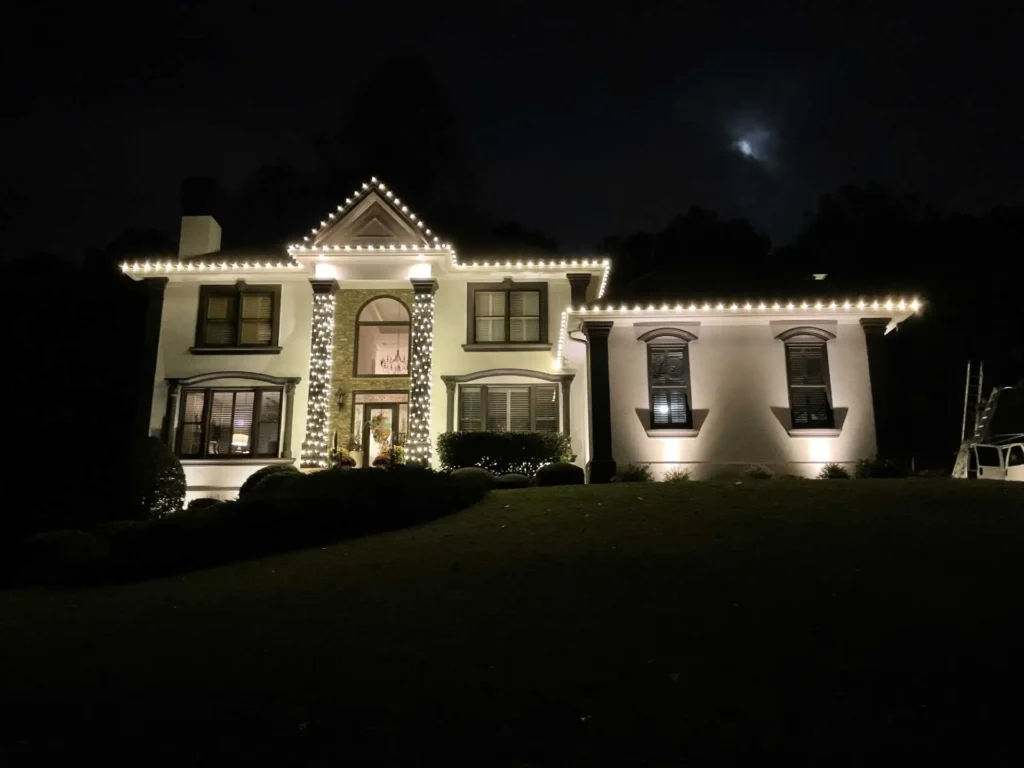
professional vs DIY Christmas light installation is the focus of this Atlanta planning guide. DIY and professional holiday lighting solve different problems. A small ground-level display may be manageable for a homeowner who already owns suitable equipment, while a tall roofline, complex electrical layout, or time-sensitive commercial display introduces different demands. The useful comparison is not simply “cheaper versus easier,” but responsibility, risk, finish quality, maintenance, and the time required from start to takedown.
To connect professional vs DIY Christmas light installation with the actual service scope, review the related Atlanta holiday-lighting service page. When you are ready to discuss Professional vs. DIY Christmas Light Installation: Safety, Time, and Results for a specific property, use the estimate request and include the address, current photos, preferred timing, and priority display areas.
Planning and design
Planning and design is a useful comparison point because DIY and professional work assign responsibility differently. Ask who performs this task, what equipment or skill it requires, and what happens if the first attempt does not produce the intended result.
In the context of Professional vs. DIY Christmas Light Installation: Safety, Time, and Results, the better option is the one that matches the property and the person doing the work. Consider time, height, electrical complexity, access, troubleshooting, and post-season responsibilities instead of judging the decision by installation day alone.
Roof, ladder, electrical, and property risks
Roof, ladder, electrical, and property risks is a useful comparison point because DIY and professional work assign responsibility differently. Ask who performs this task, what equipment or skill it requires, and what happens if the first attempt does not produce the intended result.
In the context of Professional vs. DIY Christmas Light Installation: Safety, Time, and Results, the better option is the one that matches the property and the person doing the work. Consider time, height, electrical complexity, access, troubleshooting, and post-season responsibilities instead of judging the decision by installation day alone.
Materials and attachment methods
Materials and attachment methods is a useful comparison point because DIY and professional work assign responsibility differently. Ask who performs this task, what equipment or skill it requires, and what happens if the first attempt does not produce the intended result.
In the context of Professional vs. DIY Christmas Light Installation: Safety, Time, and Results, the better option is the one that matches the property and the person doing the work. Consider time, height, electrical complexity, access, troubleshooting, and post-season responsibilities instead of judging the decision by installation day alone.
Maintenance and troubleshooting
Maintenance and troubleshooting is a useful comparison point because DIY and professional work assign responsibility differently. Ask who performs this task, what equipment or skill it requires, and what happens if the first attempt does not produce the intended result.
In the context of Professional vs. DIY Christmas Light Installation: Safety, Time, and Results, the better option is the one that matches the property and the person doing the work. Consider time, height, electrical complexity, access, troubleshooting, and post-season responsibilities instead of judging the decision by installation day alone.
Removal and storage
Removal and storage is a useful comparison point because DIY and professional work assign responsibility differently. Ask who performs this task, what equipment or skill it requires, and what happens if the first attempt does not produce the intended result.
In the context of Professional vs. DIY Christmas Light Installation: Safety, Time, and Results, the better option is the one that matches the property and the person doing the work. Consider time, height, electrical complexity, access, troubleshooting, and post-season responsibilities instead of judging the decision by installation day alone.
When DIY may or may not fit the project
When DIY may or may not fit the project is a useful comparison point because DIY and professional work assign responsibility differently. Ask who performs this task, what equipment or skill it requires, and what happens if the first attempt does not produce the intended result.
In the context of Professional vs. DIY Christmas Light Installation: Safety, Time, and Results, the better option is the one that matches the property and the person doing the work. Consider time, height, electrical complexity, access, troubleshooting, and post-season responsibilities instead of judging the decision by installation day alone.
Questions That Clarify Whether DIY Fits the Project
- What should be verified about "Planning and design" before approving professional vs DIY Christmas light installation?
- Which property facts will determine how "Roof, ladder, electrical, and property risks" is handled for this project?
- Who needs to approve or provide information for "Materials and attachment methods" in this plan?
- Could timing, access, weather, or operations change the approach to "Maintenance and troubleshooting"?
- How will "Removal and storage" be documented in the final scope for professional vs DIY Christmas light installation?
Professional vs. DIY Christmas Light Installation: Safety, Time, and Results: Practical Takeaway
Choose the approach that matches the actual height, complexity, equipment, time commitment, and risk tolerance of the project. A professional option should be judged by its documented scope and process, while a DIY option should be judged by whether it can be completed safely and maintained for the full season. For additional questions connected to professional vs DIY Christmas light installation, review the holiday-lighting FAQ before requesting a property-specific proposal.
